Small Backyard Pool Ideas: Plunge Pools, Cocktail Pools & Compact Designs
Not every backyard in Northwest Arkansas has room for a sprawling resort-style pool — and honestly, not every homeowner wants one. Over the past several months, we've fielded a growing number of calls from Bentonville, Rogers, Fayetteville, and Springdale homeowners asking the same question: "Can we still get a beautiful custom pool if our yard is small?"
The answer is yes, and we're excited to walk you through exactly how. Compact pool designs — plunge pools, cocktail pools, and spools — have become one of the fastest-growing categories in custom pool construction, and for good reason. They deliver the cooling, entertaining, and lifestyle benefits of a full-size pool while fitting comfortably into tighter lots, HOA-restricted yards, and properties where square footage is at a premium.
In this guide, we'll break down the different types of small pools, share design ideas that make a big visual impact, compare materials, and walk through what planning and budgeting actually look like for a compact pool project in our market.
Understanding Small Pool Types for Compact Backyards
Before we get into design inspiration, it helps to understand the terminology, because "small pool" actually covers a few distinct categories with different depths, purposes, and construction approaches.
What Is a Plunge Pool and How Deep Can It Be?
A plunge pool is a small, deep pool designed primarily for cooling off and relaxing rather than swimming laps. Most plunge pools we build run somewhere between 6 and 15 feet in length, though the defining feature isn't length — it's depth. Plunge pools are typically built at a consistent depth of 4 to 6 feet, deep enough to submerge comfortably and even add a bench or two without the pool needing the footprint of a traditional lap or play pool.
Because plunge pools skip the shallow end entirely, we're able to fit one into yards that would never accommodate a conventional gunite pool. They're a great fit for narrow side yards, rooftop terraces, and properties where the buildable area is limited by setbacks or HOA guidelines.
Cocktail Pools Explained: The Social Solution for Small Spaces
Cocktail pools are close cousins of plunge pools, but they're built with entertaining in mind. The name comes from their intended use — a shallow, social gathering spot where guests can stand, sit on a built-in bench or ledge, and hold a drink while chatting, rather than swim. Cocktail pools are usually shallower overall, often in the 3.5- to 4-foot range throughout, and they're frequently paired with generous tanning ledges, in-water seating, and water features that create ambiance without demanding a large footprint.
For homeowners who host often but don't necessarily swim laps, a cocktail pool can deliver more usable entertaining space per square foot than a traditional pool design.
Dipping and Spool Pools: Alternatives for Tight Urban Properties
If your lot is especially tight — think smaller lots in established neighborhoods around Fayetteville or Springdale — dipping pools and spools (a spa-pool hybrid) offer even more compact alternatives. A spool combines the footprint of a spa with the refreshing dip of a small pool, often incorporating heated and unheated zones, integrated seating, and sometimes a small jet system for light water movement. Dipping pools are simpler still: small, shallow basins meant purely for a quick cool-down.
Both options make sense for urban infill lots, courtyard-style backyards, or properties where the pool needs to share space with patios, gardens, and outdoor kitchens.
Comparing Plunge, Cocktail, and Spool Pools for Your Home
Pool TypeTypical DepthBest ForPlunge Pool4–6 ft, consistentCooling off, compact lap-style dipsCocktail Pool3.5–4 ft, consistentEntertaining, socializing, loungingSpoolVaries, spa + pool zonesTight lots, year-round use with heatingDipping PoolShallow, minimal footprintQuick cool-downs, ultra-tight spaces.
There's no single "right" answer here — the best choice comes down to how you actually plan to use the space. During a
Pool School session, we walk homeowners through this exact comparison using their own yard dimensions and lifestyle goals, which tends to make the decision much clearer.
Creative Compact Pool Designs for Small Backyards
Small doesn't have to mean plain. Some of our favorite recent projects prove that a compact pool can be the visual centerpiece of a backyard.
Modern Plunge Pool Designs with Big Style in Small Spaces
Clean geometric lines, dark plaster finishes, and minimalist water features tend to make plunge pools feel intentional rather than like a scaled-down afterthought. We often recommend a dark or natural-toned interior finish for small pools specifically because it reflects less light and reads as a design feature rather than a miniature version of a bigger pool. Adding a single sheer descent water feature or a narrow raised wall with a spillway can give a compact pool the kind of visual drama usually reserved for much larger builds.
Using Corner and L-Shaped Pools to Maximize Space
Not every yard is rectangular, and not every pool needs to be either. Corner installations and L-shaped configurations let us tuck a pool into an otherwise underused section of the yard while preserving space for a patio, fire pit, or lawn area. This approach works particularly well on the narrower lots we see throughout Rogers and Lowell, where preserving some open yard space matters just as much as the pool itself.
Elevated and Multi-Level Pool Concepts for Visual Interest
When square footage is limited, going vertical is one of the most effective ways to add visual interest. Raised pool walls, elevated spas that spill into the main pool, and multi-level decking around a compact pool all create depth and dimension without requiring additional ground footprint. These elevated elements also double as informal seating, which is especially valuable in a small backyard where every surface needs to earn its keep.
Swimming Seamlessly: Pool Patio Integration for Outdoor Living
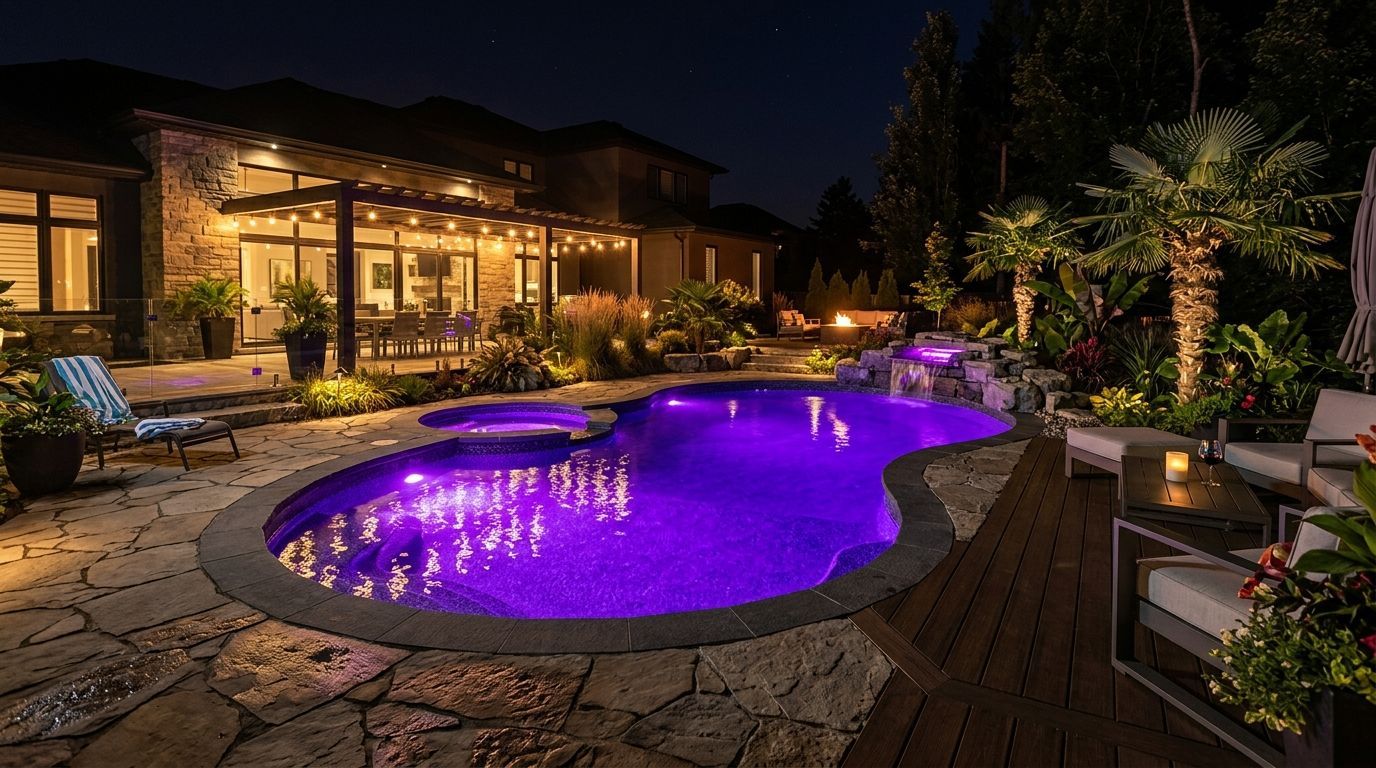
One of the biggest advantages of a compact pool is how naturally it can integrate with the rest of the outdoor living space. Rather than the pool dominating the yard, we design many of our smaller projects so the patio, pool, and landscaping read as a single cohesive space — think flush-mounted decking at the pool's edge, matching hardscape materials, and sightlines that connect the pool directly to an outdoor kitchen or covered seating area. You can browse examples of this kind of integrated design in
our work.
Compact Fiberglass Pools: Models, Installation, and Advantages
Fiberglass is one of the most popular material choices for small pool projects, and for good reason.
Best Compact Fiberglass Pool Models for Small Yards
Fiberglass manufacturers now offer a wide range of compact models specifically designed for plunge and cocktail pool applications — many in the 10- to 16-foot range with built-in benches, tanning ledges, and depth profiles suited to entertaining rather than lap swimming. Because these shells arrive pre-formed, we're able to show homeowners the exact shape, depth, and built-in features of a model before installation ever begins, which takes a lot of guesswork out of the small-pool design process.
Advantages of Fiberglass Pools for Compact Backyard Projects
Fiberglass pools typically install faster than gunite, often in a matter of weeks rather than months, which matters a great deal for smaller residential lots where equipment access and yard disruption need to be minimized. The smooth gel-coat finish also resists algae growth better than plaster, which can mean lower long-term maintenance costs — a nice bonus on a pool you're already sizing down to fit your budget and yard. We go into more detail on installation timelines and long-term upkeep on our
fiberglass pools page.
Choosing Between Fiberglass, Vinyl Liner, and Concrete Materials
That said, fiberglass isn't the only option for a compact pool. Gunite construction — while it takes longer to install — offers essentially unlimited design flexibility, which matters if you want a custom shape, built-in bench configuration, or specific depth profile that doesn't match an off-the-shelf fiberglass model. Vinyl liner pools can offer a lower upfront cost but generally require liner replacement over time, which is worth factoring into a long-term budget. We've written a full comparison of the two most common choices in our post on
gunite vs. fiberglass pools, and our team can walk through which material makes the most sense for your specific yard during a
custom pool consultation.
Planning and Budgeting Your Small Inground Pool Project
Even a compact pool is a significant investment, so it's worth planning carefully from the start.
Finding the Ideal Inground Pool Size That Fits Your Yard
The right size for your pool depends on more than just the raw square footage of your yard. Setback requirements, HOA guidelines, existing landscaping, utility easements, and how much yard space you want to preserve for other uses all factor into the final footprint. We always start by walking the property in person, because a plan that looks great on paper doesn't always account for slope, drainage, or tree root systems that can affect where a small pool can realistically go.
Budgeting for Installation and Annual Pool Running Costs
Compact pools generally cost less to install than full-size pools simply because there's less excavation, less material, and a smaller equipment package required — but the savings don't stop there. Smaller pools also tend to run less to heat and maintain year-round, since there's less water volume to treat and circulate. We've broken down what actually drives pool construction pricing in our guide on
what it costs to build a custom pool, and for homeowners looking to spread the investment out, we also offer
financing options to fit different budgets.
Planning Your Pool Project: From Vision to Installation Day
Once a design and budget are set, the construction process itself follows the same general phases as a larger pool — excavation, structural work, plumbing and electrical rough-in, finishing, and startup — just compressed into a shorter overall timeline given the smaller scope. If you'd like a detailed look at what to expect week by week, our post on
what to expect during the pool construction process walks through the full sequence, and our broader
guide to building a backyard pool in Northwest Arkansas covers the planning process from the very first conversation.
How to Maximize Enjoyment and Functionality in Compact Pools
A smaller footprint doesn't mean fewer features — it just means being more intentional about which ones earn a spot.
Top Built-In Features: Tanning Ledges, Benches, and Water Effects
In a compact pool, every feature needs to serve double duty. Tanning ledges double as a shallow lounging area for kids or pets. In-water benches provide seating for entertaining without eating into the swimmable area. A single well-placed water feature — a spillway, bubbler, or deck jet — can add both sound and visual interest without requiring extra square footage. We cover the full range of options, along with which ones tend to work best in smaller spaces, in our post on
choosing the right pool features.
Landscaping Ideas and Hardscaping for Privacy and Beauty
Because compact pools often sit closer to property lines and neighboring homes than a large pool would, privacy landscaping becomes especially important. Layered plantings, privacy screens, and strategically placed hardscape walls can make a small backyard feel secluded and intentional rather than cramped. Pairing natural stone or stamped concrete decking with the pool's finish also helps a compact design feel like a cohesive retreat rather than a single isolated feature dropped into the yard.
Designing a Backyard Retreat for Entertaining and Family Fun
Even at a smaller scale, a well-designed compact pool can absolutely serve as the anchor for family time and entertaining. Pairing a cocktail or plunge pool with a shaded seating area, an outdoor kitchen, or a fire feature creates a true backyard retreat that gets used year-round, not just during pool season. We've also written about designing pools that adapt as families grow and change — many of the same principles apply to compact designs, and you can read more in our post on
designing a pool that grows with your family.
Frequently Asked Questions About Plunge and Cocktail Pools
Do Small Pools Require Full-Size Fencing for Safety?
Yes. In Arkansas, pool safety and fencing requirements generally apply regardless of pool size, and many local municipalities and HOAs across our service area have their own specific rules on top of state guidelines. A plunge pool or cocktail pool is still a body of water deep enough to pose a drowning risk, so barrier requirements, self-closing gates, and other safety measures typically apply the same way they would to a full-size pool. We recommend confirming specific requirements with your local building department early in the planning process — our post on
permits, HOA approval, and inspections is a good starting point for understanding what's typically required before construction begins.
Getting a Quote and Next Steps for Your Compact Pool Design
If you've been holding off on a pool because you assumed your yard was too small, we'd encourage you to take another look. Between plunge pools, cocktail pools, spools, and compact fiberglass models, there's very likely a design that fits your space, your budget, and the way you actually want to use your backyard.
The best next step is a conversation. We offer a
Pool School session where we walk through pool types, materials, and realistic budgets in plain language before any design work begins — you can
book a session here. When you're ready to see what a compact pool could look like in your own yard,
request a quote and our team will help you get started.
We proudly serve homeowners throughout Bentonville, Rogers, Fayetteville, Springdale, Bella Vista, Cave Springs, Centerton, Lowell, and Johnson — reach out and let's talk about what's possible in your backyard.
Waterclear Pools