When Should You Resurface a Pool? Signs It’s Time
A swimming pool is built to last, but no pool surface lasts forever. Over time, exposure to water, chemicals, weather, and daily use gradually wears down the interior finish.
If you own a pool in Northwest Arkansas, resurfacing is one of the most important maintenance projects you’ll eventually face. The good news is that the warning signs usually appear long before serious damage occurs.
At Waterclear Pools, we help homeowners throughout Northwest Arkansas understand when resurfacing makes sense and how to plan for it. Here are the most common signs it may be time to resurface your pool.
Rough or Abrasive Pool Surfaces
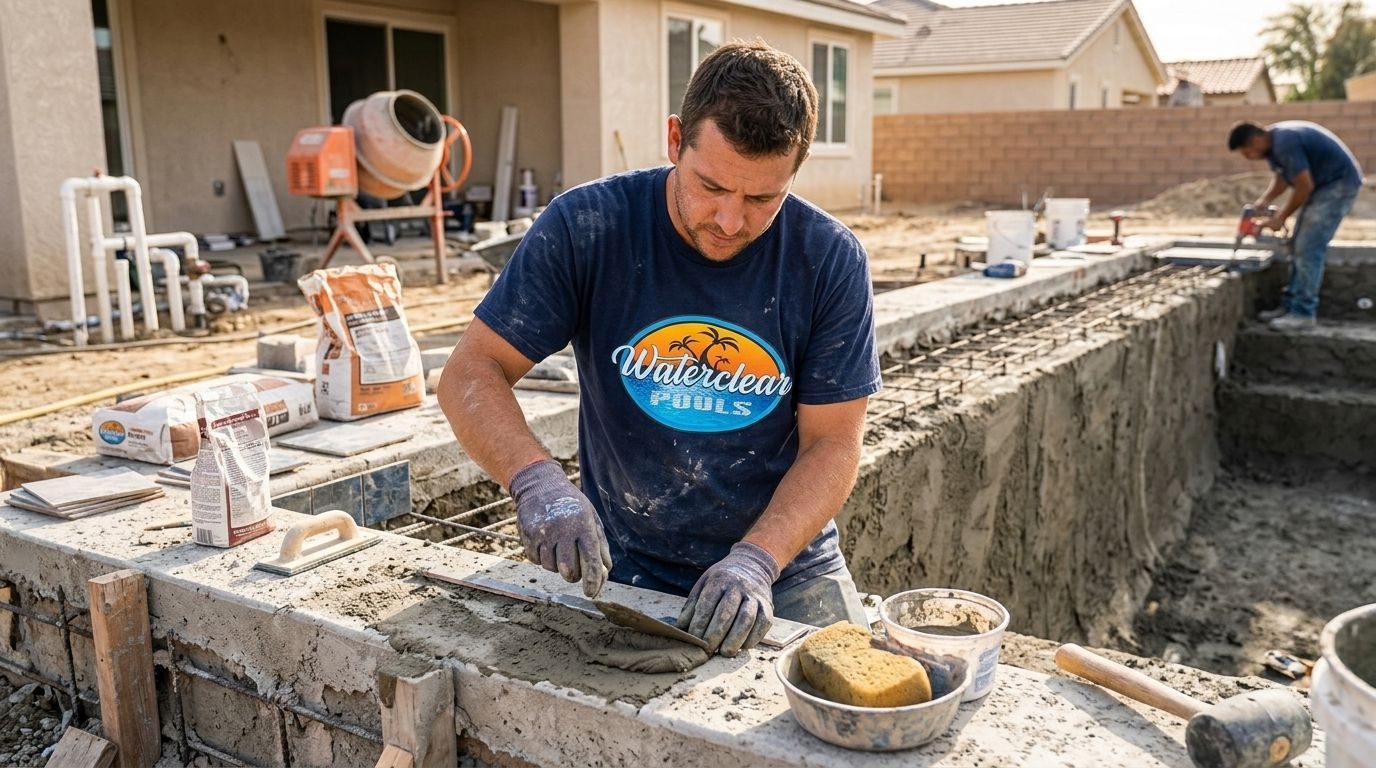
One of the first signs a pool needs resurfacing is a surface that feels rough under your feet or hands. Over time, the protective finish of plaster, pebble, or other interior materials slowly erodes. As that smooth layer wears away, the underlying material becomes exposed and abrasive. You might notice:
- Scraped toes or feet
- A gritty texture on the walls
- Surfaces that feel uneven
Besides being uncomfortable, rough surfaces can trap debris and make cleaning more difficult. Resurfacing restores the smooth finish that makes swimming more enjoyable.
Stains That Are Tough to Wash Off
Pool stains can come from minerals, algae, or chemical imbalances. In many cases, they can be removed with cleaning or chemical treatment. But when stains become permanent, the problem may be deeper than just surface buildup.
If discoloration stays after professional cleaning, it may mean the pool’s finish has become porous or worn. Once that protective layer breaks down, stains can penetrate the material and become nearly impossible to remove. Resurfacing replaces the worn finish with a new protective layer, restoring the pool’s appearance.
Working With the Right Pool Professionals
At Waterclear Pools, we help homeowners across Northwest Arkansas with both new pool builds and long-term pool care. Our focus is always on communication being clear and straightforward guidance so you understand your options. Working with us means:
Clear project timelines- Transparent pricing
- Custom quotes delivered in about 72 hours
- Focused scheduling so projects stay on track
- Most pool projects completed in six weeks or less
We also provide a Pool School program so you’ll feel more confident in managing your own pool. It also helps you understand when maintenance like resurfacing might be needed.
Cracks or Structural Surface Damage
Hairline cracks can sometimes appear in pool surfaces due to age, temperature changes, or shifting ground. Small cosmetic cracks aren’t always a structural problem, but you shouldn’t ignore them. Over time, water can seep into these areas and make the damage worse.
You might notice things like fine cracks along the surface, chipped edges and corners, or areas where the finish is flaking off. A resurfacing project fixes these issues before they grow into larger repairs.
Frequent Chemical Imbalance
When a pool surface begins to deteriorate, it can actually start to affect the water chemistry too. Worn finishes often become porous, which means they absorb chemicals and minerals from the water. This can make it harder to maintain balanced chemical levels.
Homeowners sometimes notice things like frequent chemical fluctuations, the need for more chemicals to balance the water, or even cloudy water. A new pool surface helps stabilize the environment inside the pool, making water care easier.
How Often Do Pools Need Resurfacing?
How often your pool needs resurfacing will usually depend on the type of finish it has and also how well your pool is being maintained. We’ve found that, in most cases, resurfacing tends to be important at around these times:
- Plaster surfaces: about 7 to 10 years
- Pebble finishes: around 15 to 20 years
- Quartz finishes: often 10 to 15 years
The climate, water chemistry, and how often you use your pool can also matter. Regular maintenance and proper chemical balance makes your pool surface last longer, but eventually every pool reaches the point where resurfacing becomes the best option.
Of course, things can always be different for you. It’s always a good idea to get in touch with professionals such as ourselves to help you assess your pool before you commit to a full resurfacing.
Ready to talk about your pool?
If your pool surface is showing signs of wear, it’s probably time to consider resurfacing.
Use the quote request form on this page to connect with our team and request a custom consultation. We’ll review your pool, discuss potential solutions, and provide a clear proposal within about 72 hours.
Whether you’re resurfacing an older pool or planning a brand new backyard project, Waterclear Pools is here to help you maintain your pool for years to come.
Waterclear Pools