5 Fiberglass Pool Myths (And What's Actually True)
If you've spent any time researching pool options for your Northwest Arkansas backyard, you've probably run into a lot of conflicting information about fiberglass pools. Some of it comes from outdated products, some from people who've only ever worked with
gunite pools, and some of it just isn't true anymore. We build both gunite and fiberglass pools across Bentonville, Rogers, Fayetteville, Springdale, and Fort Smith, and we hear the same handful of myths from homeowners over and over. So let's clear them up, one at a time.
Debunking the Most Common Fiberglass Pool Myths
Fiberglass pool technology has changed a lot over the past couple of decades, but the myths haven't kept pace. Here are the five we hear most often, and what's actually true today.
Myth 1: Fiberglass Pools Are More Expensive Than Other Pool Types
This one gets it backwards. Fiberglass shells typically have a lower upfront cost than
gunite construction of a comparable size, largely because the shell arrives pre-formed and installation takes days rather than weeks. Where the confusion comes from is long-term cost: fiberglass's non-porous surface resists algae growth and doesn't need replastering every decade the way gunite does, so the total cost of ownership often favors fiberglass over the life of the pool. If you want to see how the two options stack up side by side, our breakdown of
gunite vs. fiberglass pools walks through the real numbers.
Myth 2: Fiberglass Pools Look Cheap and Boring
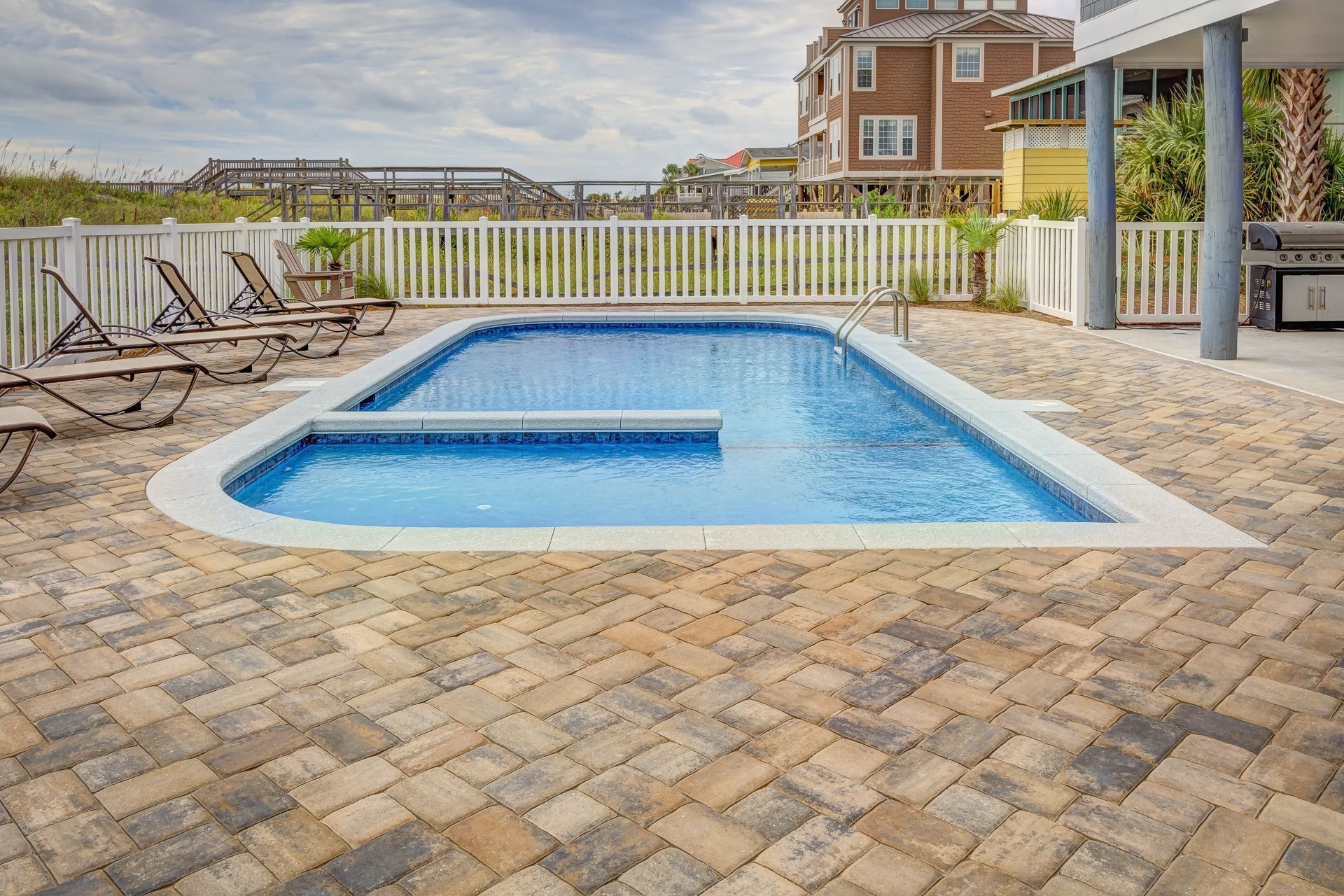
This myth is a holdover from the 1970s and 80s, when fiberglass shells came in a handful of plain shapes and colors. Modern manufacturers offer dozens of shapes, tanning ledges, built-in benches, and gel-coat finishes that mimic natural stone or shimmering water tones. When we walk homeowners through our current
fiberglass pool lineup, most are surprised at how far the designs have come from what they remember.
Myth 3: Fiberglass Pools Can't Be Customized
While it's true that a fiberglass shell can't be poured into an infinite number of shapes the way gunite can, that doesn't mean customization is off the table. Homeowners can choose from a wide range of shell shapes and sizes, then layer in custom decking, water features, lighting, and landscaping around the shell to make the finished pool feel completely unique to their backyard. We regularly pair fiberglass shells with the same waterfalls, tanning ledges, and outdoor kitchen features we build for gunite clients.
Myth 4: Fiberglass Pools Aren't Durable and Have a Short Lifespan
A quality fiberglass shell, properly installed, can last decades. The gel-coat surface resists cracking and staining far better than plaster, and because the shell flexes slightly rather than cracking under pressure, it holds up well in areas with shifting soil. That matters a lot here in Northwest Arkansas, where Ozark limestone and clay soil conditions put real stress on any in-ground structure. Proper site prep and a correctly engineered base are what actually determine a fiberglass pool's lifespan, not the material itself.
Myth 5: Fiberglass Pools Float or Pop Out of the Ground
Pool "popping" is a real phenomenon, but it's caused by improper installation, not the fiberglass material itself. It happens when groundwater builds up around or beneath a shell that wasn't installed with adequate drainage, hydrostatic relief valves, and a properly compacted base. Builders who understand local soil and water table conditions design around this risk from day one. It's one of the reasons site evaluation matters so much before construction ever starts, and it's a big part of what we walk homeowners through in
Pool School, our in-home education program.
The Truth About Fiberglass Pool Performance in Different Climates
Northwest Arkansas sees genuine seasonal swings, from icy winter mornings to humid, 95-degree summer afternoons. Fiberglass pools are built to handle both ends of that range.
How Fiberglass Pools Stand Up to Cold Winters
Fiberglass shells have a small amount of natural flexibility, which helps them handle the freeze-thaw cycles that are hard on more rigid pool surfaces. That flex is part of why fiberglass tends to hold up well in areas with our region's clay soil, which expands and contracts as moisture levels change through the winter. Proper winterization still matters, but the shell itself isn't the weak point.
Fiberglass Pools Thrive in Warm Climates
On the flip side, fiberglass's smooth, non-porous gel coat resists the algae blooms that thrive in warm, humid conditions, which means less scrubbing and fewer chemical adjustments during peak swim season. Paired with a
saltwater system, many homeowners find their fiberglass pool needs noticeably less hands-on maintenance through a long Arkansas summer than a traditional plaster pool would.
Installation and Long-Term Value of Fiberglass Pools
Beyond busting myths about the material itself, it's worth understanding what installation actually looks like and what it means for your budget over time.
Fiberglass Pool Installation Is Fast and Minimally Disruptive
Because the shell is manufactured off-site and delivered ready to install, a fiberglass pool project typically moves from excavation to water in a matter of days rather than the many weeks a gunite build requires. That shorter timeline means less time with an open excavation in your backyard, fewer disruptions to your landscaping, and a quicker path to actually using your pool.
Low Maintenance and Energy Efficiency Save You Money
The smooth gel-coat surface doesn't just resist algae, it also retains heat more efficiently than textured plaster, which can translate into lower heating costs if you run a pool heater through the shoulder seasons. Combined with lower chemical usage and no replastering cycle, the ongoing cost of owning a fiberglass pool tends to run lower than homeowners expect. If cost is a major factor in your decision, our
financing page breaks down options for spreading the investment over time.
Frequently Asked Questions About Fiberglass Pools
Are Fiberglass Pools Slippery or Unsafe?
No more than any other pool surface, and often less so. Textured, slip-resistant finishes are standard on modern fiberglass steps and benches, and because the gel coat resists algae growth, it's less prone to developing the slick biofilm that can build up on neglected plaster surfaces.
How Long Will a Fiberglass Pool Last?
With proper installation and reasonable maintenance, a fiberglass shell can last 25 to 30 years or more. The manufacturer's structural warranty on the shell itself is typically the longest of any pool type, and it's part of why we back our installations with our own
warranty coverage on top of that.
Final Thoughts and Expert Insights on Choosing Fiberglass Pools
Why We Recommend Fiberglass Pools Based on Experience
We recommend fiberglass to a lot of Northwest Arkansas homeowners, not because it's the right fit for every backyard, but because it consistently delivers on lower maintenance, faster installation, and strong long-term value when the site conditions support it. Every recommendation we make comes out of an actual site evaluation, not a one-size-fits-all sales pitch.
Behind the Scenes: How Quality Pool Shells Are Made
Quality fiberglass shells start with a mold that's been engineered for structural strength, then built up in layers of resin and fiberglass matting before receiving a gel-coat finish. The thickness and layering of that process is what separates a shell built to last decades from a cheaper import that flexes too much or cracks prematurely. It's a detail worth asking about, and it's exactly the kind of thing we cover during a Pool School visit.
Transform Your Backyard with Confidence
Choosing between pool types shouldn't feel like a gamble. When you understand what's actually true about fiberglass, and what your specific yard and soil conditions call for, the decision gets a lot clearer.
Explore Pool Designs and Take the Next Step
Discover the Latest Fiberglass Pool Designs for Your Home
Every backyard is different, and the best way to see what's possible is to look at real installations. Browse
our work to see the range of fiberglass and gunite pools we've built across the region, from compact backyard designs to full outdoor living spaces.
Ready to Build Your Dream Pool?
If you're ready to talk through your options,
request a quote and we'll set up a time to walk your property and talk through what makes sense for your soil, budget, and design goals.
Additional Resources and Company Information
Visit Our Learning Center for More Pool Insights
If you're still comparing pool types, our
pool design guide is a good next stop, along with our breakdown of the
complete process of building a backyard pool in Northwest Arkansas.
About Our Company and Commitment to Quality
We're a
custom pool builder serving Bentonville, Rogers, Fayetteville, Springdale, Fort Smith, and the surrounding communities, and every project we take on includes the same warranty-backed approach and homeowner education that Pool School is built around. You can read more
about our team and our approach to building pools that last.
Highlights of Our Best-Selling Fiberglass Pool Models
Our most popular fiberglass shapes tend to be the ones that balance a generous swim area with space left over for a tanning ledge or bench seating. If you want to see current shapes and sizes available, our
fiberglass pools page has the full lineup, along with photos from recent Northwest Arkansas installations.
Waterclear Pools